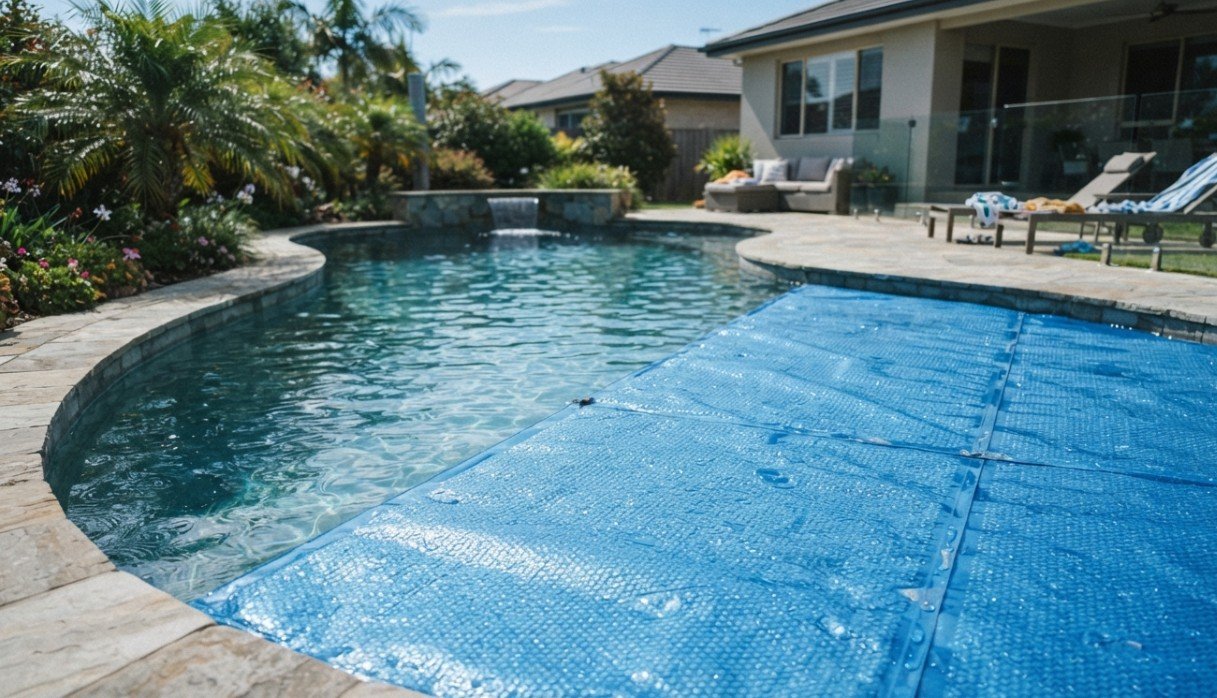
Key takeaway: A pool cover cuts evaporation by up to 95%, which for an average 32m² unheated pool losing around 62,400 litres a year works out to roughly 56,000 to 59,000 litres saved annually. Add heating cost cuts of 50 to 70% and chemical savings of 30 to 50%, and a $170 to $980 solar or thermal cover typically pays for itself within one to two seasons.
Evaporation is the single biggest source of daily water and heat loss in an uncovered backyard pool, more than splashing, backwashing or leaks combined for most pools. A cover addresses that directly, so the “worth it” question really comes down to how much you’re currently losing and how quickly a $200 to $600 cover claws that back. Here’s the actual numbers.
What a Cover Actually Saves, by the Numbers
| Factor | Without a Cover | With a Cover (up to 95% less evaporation) |
| Evaporation, 32m² unheated pool (Brisbane climate) | ~62,400 L/year | ~3,100 to 6,200 L/year remaining, roughly 56,000 to 59,000 L/year saved |
| Heating cost, if the pool is heated | Baseline running cost | Cut by 50 to 70% |
| Chemical use (chlorine or salt top-ups) | Baseline usage | Cut by 30 to 50% |
| Typical solar or thermal cover cost | – | $170 to $980, custom-cut |
Worked Example: Is It Actually Worth It?
Take that 32m² unheated Brisbane pool losing around 62,400 litres a year. A cover cutting evaporation by 95% saves roughly 59,000 litres of that annually, water you’d otherwise be topping up from the hose. If the same pool is heated, you’re also cutting 50 to 70% off the heating bill, since evaporation is what carries most of that heat away overnight. Stack the water saving, the heating saving (if relevant) and the reduced chemical top-ups together, and a $170 to $980 solar or thermal cover typically pays for itself within one to two swimming seasons. See our full pool heating cost comparison if you want the exact running-cost numbers for your heating method before doing the sums for your own pool.
When a Cover Might Not Be Worth It
- You genuinely never plan to cover the pool day to day, for example an entertaining-focused pool that’s uncovered from spring to autumn regardless.
- Water and electricity are cheap where you live, which stretches the payback period out, though it rarely disappears entirely.
- You’re comparing against an automatic cover specifically. Automatic covers cost several times more than a solar or thermal cover, so the payback calculation is really about convenience, not evaporation savings alone. Our full guide to pool cover types breaks down where automatic covers actually make sense.
Frequently Asked Questions
Are pool covers worth it?
For most owners, yes. Between evaporation savings of up to 95%, heating cost cuts of 50 to 70% if the pool is heated, and reduced chemical use, a $170 to $980 solar or thermal cover typically pays for itself within one to two seasons.
How much water does a pool cover save?
A cover can cut evaporation by up to 95%. For a 32m² unheated pool losing around 62,400 litres a year to evaporation, that works out to roughly 56,000 to 59,000 litres saved annually.
Do pool covers reduce heating costs?
Yes, significantly. Since evaporation carries away a large share of a heated pool’s warmth overnight, a cover can cut heating costs by 50 to 70% compared with leaving the same pool uncovered.
Does a pool cover save on pool chemicals?
Yes. Sunlight and evaporation both break down and carry off dissolved chlorine and other chemicals, so covering the pool when it’s not in use typically cuts chemical usage by 30 to 50%.
How long does a pool cover take to pay for itself?
Most solar and thermal covers, costing $170 to $980, pay for themselves within one to two swimming seasons once you add up the water, heating and chemical savings together. Automatic covers cost far more upfront, so their payback is really about convenience rather than a straightforward cost recovery.
