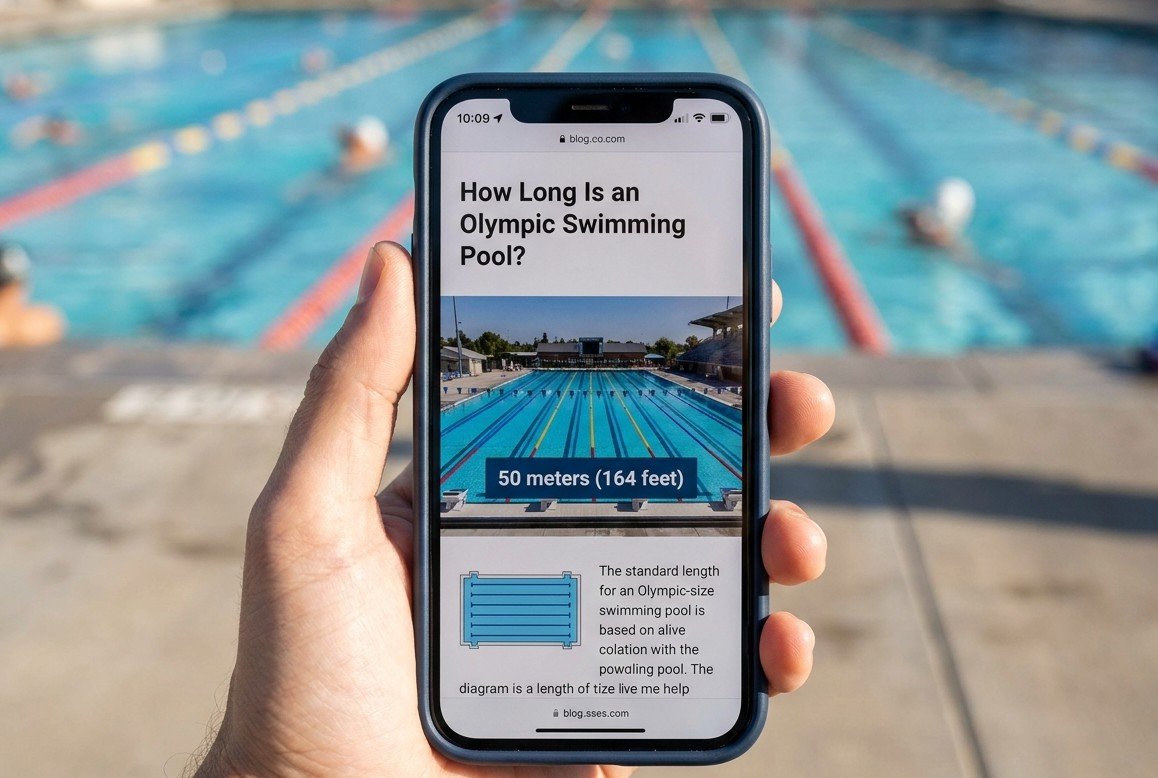
Key takeaway: An Olympic swimming pool is 50 metres long, 25 metres wide, and at least 2 metres deep (3 metres is now standard for major competitions), holding 2,500,000 litres of water at that minimum depth. It has 10 lanes total, but only 8 are used for racing, since the outer two are kept empty as wave buffers.
An Olympic swimming pool measures 50 metres long by 25 metres wide, with a minimum depth of 2 metres under World Aquatics (formerly FINA) rules, though modern competition pools are typically built to 2.5 or 3 metres to reduce wave turbulence. At the minimum 2 metre depth, that works out to 2,500,000 litres of water, roughly the same footprint as a 50-metre lap pool at a large public aquatic centre, just built to a stricter, internationally certified tolerance.
Olympic Pool Dimensions at a Glance
| Measurement | Metric | Imperial |
| Length | 50 metres (+10mm/-0mm tolerance) | 164 ft 1 in |
| Width | 25 metres | 82 ft 0 in |
| Lanes | 10 lanes total (8 used for racing), 2.5m each | 8 ft 2 in per lane |
| Minimum depth | 2 metres (3 metres common for major events) | 6 ft 7 in (9 ft 10 in) |
| Water temperature | 25.0 to 28.0 degrees Celsius | 77 to 82 degrees Fahrenheit |
| Volume at 2m depth | 2,500,000 litres (2,500 cubic metres) | 660,000 US gallons |
Working Out the 2.5 Million Litre Figure
Volume is just length times width times depth: 50m x 25m x 2m = 2,500 cubic metres, and since 1 cubic metre holds exactly 1,000 litres, that’s 2,500,000 litres. That figure assumes the World Aquatics minimum depth of 2 metres uniformly across the whole pool. Build it to the now-common 3 metre competition depth instead and the same 50m x 25m footprint holds 3,750,000 litres, which is why you’ll see different “Olympic pool volume” figures quoted depending on which depth a source assumes. For comparison, an average Australian backyard pool holds somewhere between 20,000 and 80,000 litres, so an Olympic pool at minimum depth holds roughly 30 to 125 times as much water.
Why There Are 10 Lanes But Only 8 Swimmers
The 25 metre width splits into 10 lanes of 2.5 metres each, but international competition only uses 8 of them for racing. The outermost lane on each side is left empty specifically to absorb wave energy bouncing back off the pool walls, so it doesn’t interfere with the swimmers in lanes 1 to 8. It’s a genuinely common mix-up: the pool is 10 lanes wide by design, but you’ll only ever see 8 swimmers racing at once in an Olympic final.
Frequently Asked Questions
How long is an Olympic swimming pool?
50 metres long, under World Aquatics competition rules, with a tolerance of plus 10mm and minus 0mm when automatic timing touch panels are fitted. This is the length used for both Olympic and World Championship long-course swimming events.
How many litres are in an Olympic swimming pool?
2,500,000 litres at the World Aquatics minimum depth of 2 metres (50m x 25m x 2m). Pools built to the more common 3 metre competition depth hold 3,750,000 litres instead, so the exact figure depends on which depth you’re measuring against.
How deep is an Olympic swimming pool?
At least 2 metres under World Aquatics rules, though most modern competition pools are built to 2.5 or 3 metres. The extra depth reduces wave turbulence bouncing back up from the floor, which would otherwise slow swimmers down.
How wide is an Olympic swimming pool?
25 metres, split into 10 lanes of 2.5 metres each. Only 8 of those lanes are used for racing; the outer two are left empty as wave buffer zones.
How many gallons are in an Olympic swimming pool?
About 660,000 US gallons at the minimum 2 metre depth (2,500,000 litres converted to US gallons). That figure rises to roughly 990,000 US gallons at a 3 metre depth.
What’s the difference between an Olympic pool and an Olympic-size pool?
An Olympic pool is one that’s actually certified to World Aquatics competition standards for length, lane width and tolerances. “Olympic-size” is a looser, uncertified marketing term some backyard and community pools use simply because they’re roughly 50m long, without meeting the full certification requirements.
