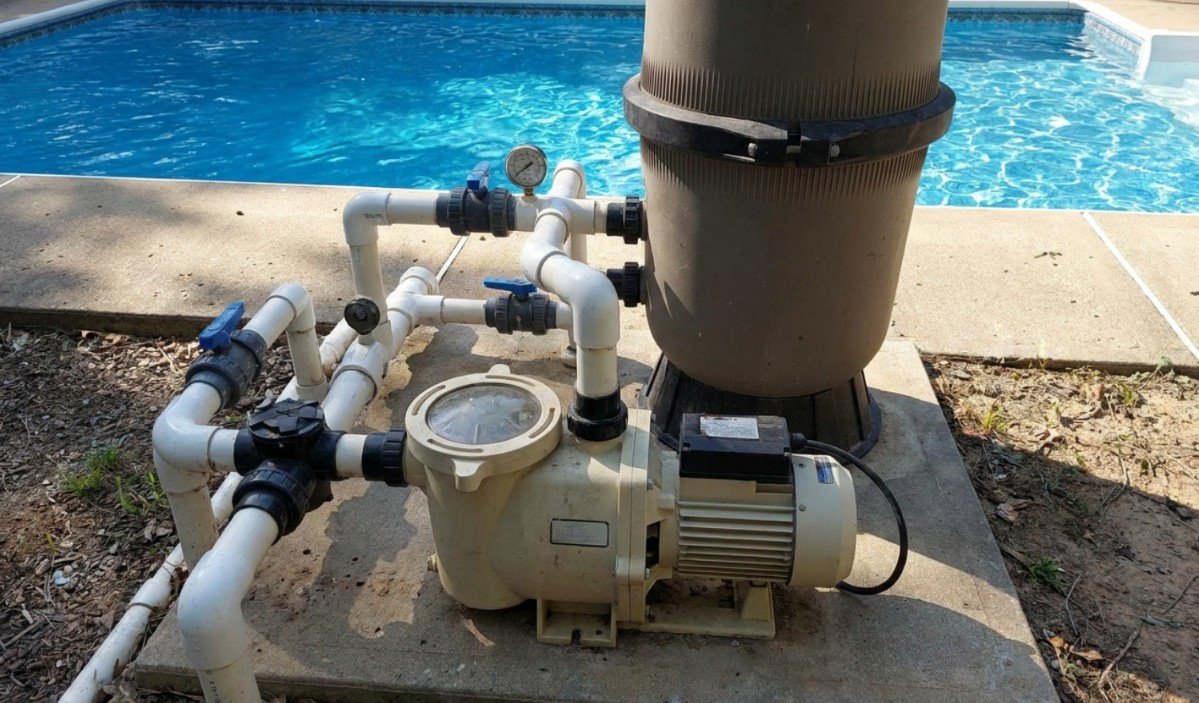
Key takeaway: A pool pump works by spinning an impeller that pulls water through a strainer basket, pushes it through the filter, and returns it clean to the pool, a full cycle called a turnover. Most Australian backyard pools need one turnover a day, which on average works out to 6 to 8 hours of pump running time in summer and 4 to 6 in winter, and switching from a single-speed to a variable-speed pump typically cuts running costs by 70 to 85% at the lower speeds most pools actually need for routine filtration.
A pool pump is the piece of equipment that moves water out of your pool, through the filter and sanitising system, and back in again, and it’s the single most important piece of equipment your pool has. Without it running long enough each day, chlorine can’t circulate evenly, debris settles instead of reaching the filter, and algae gets a foothold even if your chemistry is otherwise perfect. Get the pump and its run time right and most other pool problems get noticeably easier to manage.
This guide covers how a pump actually works, how long to run it, the difference between single-speed and variable-speed models, and how to size one correctly, everything you need to keep your pool’s circulation system running efficiently.
A note on electrical safety: a pool pump runs on mains power and its motor housing can retain a live capacitor charge briefly after switching off. Always isolate power at the switchboard, not just the pump’s own switch, before opening the pump housing, replacing a seal, or doing anything beyond emptying the strainer basket. Wiring and capacitor work on a pool pump should be left to a licensed electrician.
How a Pool Pump Actually Works
Inside the pump housing sits an impeller, a small spinning disc with curved vanes, connected directly to an electric motor. When the motor spins the impeller at speed, it creates suction that pulls water in from the pool’s skimmer and main drain, through a strainer basket that catches leaves and debris before they can reach and damage the impeller, then pushes that water out under pressure toward the filter. The filter strips out the finer debris the basket missed, sanitised or heated water (if you have a heater) passes through, and it all returns to the pool via the return jets. That entire loop, pool to pump to filter and back, is one pass; running it long enough each day to move your whole pool volume through once is called a turnover, and it’s the baseline every run-time recommendation below is built around.
The strainer basket is the one part of this system every pool owner should check regularly: a clogged basket restricts flow into the pump, and a pump starved of water can start drawing air instead, which is the same “losing prime” problem that affects manual pool vacuuming. Emptying it every week or two, more often after storms or heavy leaf drop, is the single easiest thing you can do to protect the pump itself.
How Long Should You Run Your Pool Pump?
The rule of thumb most Australian pool professionals use is one full turnover of your pool’s total volume every day, and a simple guide is roughly 1 hour of pump run time for every 10 degrees Celsius of air temperature above 15 degrees. In practice that breaks down by season and by state:
| Season / region | Typical run time | Why |
| Winter (most of Australia) | 4 to 6 hours a day | Lower water temperature slows algae growth and reduces bather load |
| Summer (most of Australia) | 6 to 8 hours a day | Higher temperatures and heavier pool use both accelerate chlorine demand and algae risk |
| WA summer | 7 to 9 hours a day | Extended high heat and long summers |
| QLD (year-round) | 8 to 10 hours a day | Humidity, frequent rain and higher algae risk |
To work out your own exact figure rather than relying on a rule of thumb, divide your pool’s volume in litres by your pump’s flow rate in litres per minute; the result in minutes is one turnover. A 60,000 litre pool with a pump moving 200 litres per minute needs 300 minutes, 5 hours, to complete one turnover. If you don’t know your pool’s volume yet, that’s worth working out first, since it’s the number every pump, chemical and filter calculation depends on.
Single-Speed, Dual-Speed and Variable-Speed Pumps
Every pool pump falls into one of three categories, and the difference between them is almost entirely about running cost, not filtration quality:
| Type | How it runs | Running cost | Best for |
| Single-speed | One fixed speed, full power any time it’s on | Highest; no ability to run slower for routine filtration | Older installs, tight upfront budgets |
| Dual-speed | A high setting and a low setting, switched manually or on a timer | Moderate; some savings running low overnight | A middle-ground upgrade without full variable-speed cost |
| Variable-speed | Adjusts continuously across a range of speeds to match demand | Lowest; typically 70 to 85% less energy at the low speeds used for routine turnover | Most owner-occupied pools, especially in states with higher electricity prices |
Most Australian pool owners who switch from single-speed to variable-speed report saving somewhere between $700 and $1,200 a year on electricity, with the pump itself typically paying for its higher purchase price back within 12 to 18 months through those savings. Some local councils and utilities also run rebate schemes for upgrading to a 6-star or higher energy-rated pump, worth checking before you buy since a rebate can shorten that payback period further.
What Size Pump Do You Need?
Pump size is really a flow rate question, not a horsepower one: the pump needs to move enough litres per minute to turn over your specific pool volume within your target run time, without overpowering pipework or a filter rated for a lower flow, which wastes energy and can shorten filter life. As a starting point, a pump is undersized if it can’t achieve one turnover within a reasonable daily run time for your pool’s volume, and oversized if it’s rated well beyond what your pipe diameter and filter can actually handle, since the excess flow just creates pressure and noise rather than better filtration. Getting this right depends on your pool’s actual volume, pipe diameter and filter type together, so it’s worth confirming with your pool shop or installer rather than guessing from pump wattage alone.
Common Pump Problems
- Losing prime: usually air getting into the system through a clogged strainer basket, a loose lid seal, or a suction-side pipe leak, rather than a fault in the pump itself
- Unusual noise: often a sign of a worn bearing, cavitation from restricted flow, or debris caught in the impeller
- Reduced flow despite the pump running: check the strainer basket and skimmer baskets first, then filter pressure, before assuming the pump itself has failed
- Pump runs but nothing comes out the returns: often a closed or faulty valve elsewhere in the system rather than the pump
Pool Pumps vs Pool Heat Pumps: Don’t Mix Them Up
A “pool pump” and a “pool heat pump” are two different pieces of equipment doing two different jobs, despite the overlapping name. The pump covered in this guide circulates and filters your pool water and runs essentially every day. A pool heat pump is a separate heating appliance, similar in principle to a reverse-cycle air conditioner, that warms the water as it passes through on its way back from the filter, and it’s really part of your pool’s heating system rather than its circulation system. If you’re researching water temperature, running costs for heating, or which heat pump size suits your pool, that’s a heating question rather than a pump question, and we cover it in our dedicated pool heating guide (coming soon on this site).
Frequently Asked Questions
How does a pool pump work?
A motor spins an impeller that sucks pool water in through a strainer basket, forces it through the filter, and returns clean water to the pool via the return jets. Running this loop long enough each day to move your whole pool volume through once is called a turnover.
How many hours a day should a pool pump run?
Most Australian pools need 4 to 6 hours a day in winter and 6 to 8 hours in summer to complete one full turnover, with hotter states like WA and QLD often needing 7 to 10 hours. The exact figure depends on your pool’s volume and your pump’s flow rate.
What does a pool pump do?
It circulates pool water through the filter and sanitising system and back again. Without enough daily run time, chlorine can’t distribute evenly, debris settles instead of being filtered out, and algae gets a foothold even with otherwise correct water chemistry.
How much electricity does a pool pump use?
It depends heavily on pump type and run time: a single-speed pump running 6 to 8 hours a day on high uses considerably more power than a variable-speed pump doing the same job at a lower speed, often 70 to 85% less at the speeds most pools actually need for routine filtration.
How long should a pool pump last?
Most quality pool pumps last several years with normal maintenance, mainly keeping the strainer basket clear and avoiding the pump running dry. Motor bearings and seals are the parts most likely to wear out and need replacing before the whole unit does.
What size pool pump do I need?
Enough flow rate, in litres per minute, to turn over your pool’s full volume within your target daily run time, matched to what your pipe diameter and filter can actually handle. This depends on your specific pool’s volume and plumbing, so it’s worth confirming with a pool shop rather than sizing from wattage alone.
Why does my pool pump keep losing prime?
Almost always air entering the system, through a clogged strainer basket, a loose pump lid seal, or a leak somewhere on the suction side of the plumbing, rather than a fault inside the pump itself. Check and clear the strainer basket first.
Is a variable-speed pool pump worth it?
For most owner-occupied pools, yes: the energy savings at lower running speeds typically pay back the higher purchase price within 12 to 18 months, and some councils or utilities offer rebates that shorten that further. It matters less for a pool used only occasionally.
Is a pool pump the same as a pool heat pump?
No. A pool pump circulates and filters water and runs daily; a pool heat pump is a separate heating appliance that warms the water, similar in principle to a reverse-cycle air conditioner. The overlapping name is a common source of confusion, not a sign they do the same job.
