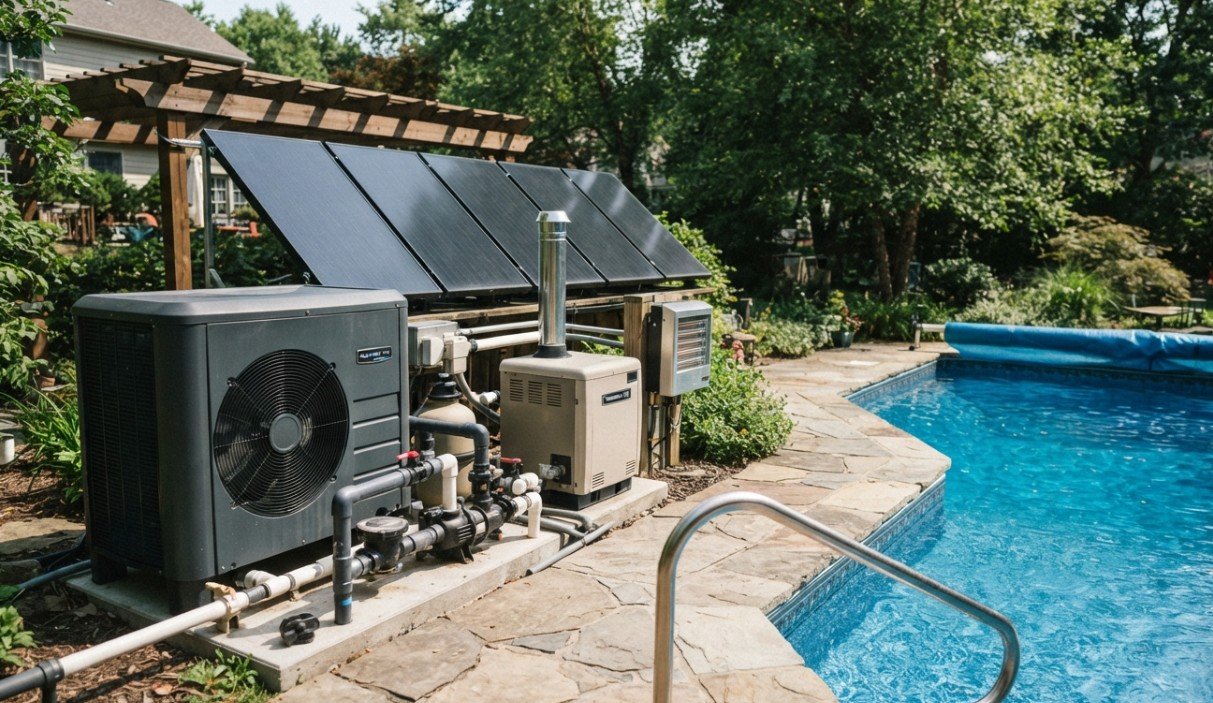
Key takeaway: Solar heating is cheapest to run, roughly $50 to $100 a year, but depends on the sun. Heat pumps sit in the middle, roughly $250 to $800 a year, heating steadily using a heat-exchange process that returns 5 to 6 times more heat energy than the electricity it uses. Gas is fastest but most expensive to run, roughly $1,200 to $3,500+ a year. Over 10 years on a standard 50,000-litre South-East Queensland pool, that works out to about $5,750 for solar, $10,500 for a heat pump, and $26,000 for gas.
There’s no single “best” way to heat a pool. The right answer depends on your climate, how many months a year you actually want to swim, and whether you’re heating for daily use or just want the water comfortable for a weekend event. Solar, heat pump, gas and electric resistance heating all work on genuinely different principles, with running costs that differ by an order of magnitude between the cheapest and the most expensive. Here’s how each one actually works, what it costs installed and to run, and how to pick between them.
How Each Heating Method Actually Works
- Solar heating pumps pool water through black collector panels, usually mounted on the roof, that absorb heat from the sun before returning the warmed water to the pool. The heat itself is free, so the only running cost is the electricity for the pump that’s already circulating your water.
- Heat pumps work like a reverse-cycle air conditioner, pulling warmth out of the surrounding air and transferring it into the pool water. A well-rated unit returns a coefficient of performance (COP) of around 5 to 6, meaning one kilowatt of electricity in delivers five to six kilowatts of heat out.
- Gas heaters burn natural gas or LPG to heat water directly and quickly, at roughly 85 percent efficiency at best. That direct combustion is what makes gas the fastest option, and also the most expensive to run continuously.
- Electric resistance heaters use a simple resistive coil that converts one kilowatt of electricity into one kilowatt of heat, a one-to-one ratio with none of a heat pump’s multiplying effect. That makes them cheap to buy but the most expensive per kilowatt of heat delivered, so they’re rarely used as a primary heater for anything larger than a small spa.
Pool Heating Costs Compared
| Method | Typical Install Cost | Annual Running Cost | 10-Year Total (SEQ, 50,000L pool) | Best For |
| Solar | $3,000 to $6,000 | $50 to $100 | ~$5,750 | Warm, sunny climates and budget-conscious owners |
| Heat Pump | $2,690 (9kW) to $9,451+ (35kW) | $250 to $800 | ~$10,500 | Reliable, year-round heating in most Australian climates |
| Gas | $2,500 to $5,000 plus gas connection | $1,200 to $3,500+ | ~$26,000 | Fast heat-up for occasional use, like heating before an event |
| Electric Element | Low unit cost | Highest cost per kilowatt of heat of any option | Not commonly used at pool scale | Small spas or backup heating only |
How Long Does It Take to Heat a Pool?
A heat pump typically raises pool temperature by around half a degree to one degree Celsius per hour, so heating a pool from cold usually takes one to two full days of continuous running. Gas heaters are the fastest option by a wide margin, which is why they’re often chosen for occasional heating rather than year-round use. Solar heating speed depends entirely on the weather and pump run time, and you can’t simply turn it up when you need the pool warm by a certain day.
Choosing the Right Heating Method for Your Pool
- You’re in Queensland, WA or northern NSW: solar is usually viable as your primary heater thanks to strong, consistent sun, and it’s the cheapest to run by a wide margin.
- You’re in a cooler southern state, or want dependable warmth regardless of weather: a heat pump delivers more consistent heating, at a moderate running cost.
- You only need heat occasionally, for a weekend or an event: gas heats fastest, and the higher running cost matters less if you’re not using it constantly.
- You swim more than about eight weeks a year: a heat pump’s higher upfront cost typically pays back within one to three seasons compared with ongoing gas running costs.
Whichever method you choose, pairing it with a pool cover cuts your running cost further, since an uncovered pool loses much of its heat to evaporation overnight, undoing a chunk of whatever the heater added during the day. Your pump’s run time also affects the total power bill alongside the heater itself, so it’s worth checking how much power your pool pump uses as part of the same sums.
Climate-by-Climate Heating Recommendations
- Queensland, WA and northern NSW: Strong, consistent sun makes solar a genuinely viable primary heater for most of the year, with a heat pump as a sensible backup for cloudier stretches.
- NSW (southern) and South Australia: A heat pump is usually the more dependable primary choice, with solar as a cost-cutting supplement rather than the whole solution.
- Victoria and Tasmania: Cooler air temperatures reduce a heat pump’s efficiency somewhat, but it still comfortably outperforms gas on running cost for anyone swimming more than a couple of months a year. Gas suits short, occasional heating windows better than year-round use here.
Can You Combine Heating Methods?
Yes, and many pool owners do. A common setup pairs solar collectors as the primary heat source with a heat pump as backup for overcast periods or shoulder seasons, giving you solar’s near-zero running cost most of the time with a heat pump’s reliability when the weather doesn’t cooperate. Gas is sometimes added on top of either as a fast-heat option for a specific event, since neither solar nor a heat pump can raise temperature quickly on demand. The trade-off is complexity and upfront cost: you’re paying for two systems instead of one, so this makes the most sense for larger pools or households that swim through most of the year rather than a few weekends each summer.
How to Cut Your Heating Bill Further
- Fit a pool cover. Evaporation is the biggest source of overnight heat loss, and a cover can cut heating costs by 50 to 70% regardless of which heating method you use.
- Run your pump during the heater’s operating hours rather than continuously, since a heat pump or solar system only heats while water is actively circulating through it.
- Set a realistic target temperature. Each extra degree above around 28 to 29°C adds meaningfully to running costs for comparatively little added comfort for most swimmers.
- Service your heat pump or gas heater annually. A unit with a dirty filter or low refrigerant charge works harder for less heat output, quietly inflating your power or gas bill.
Installation Considerations Beyond the Unit Price
- Heat pumps need a dedicated electrical circuit sized for the unit’s amp draw, and enough clearance around the outdoor unit for airflow, so factor in electrical work on top of the unit price if your switchboard needs upgrading.
- Gas heaters need either a reticulated natural gas connection or bottled LPG with regular refills, and the connection or line-running cost can add materially to the quoted install figure depending on how far the heater sits from your gas supply.
- Solar collectors need north-facing roof space with minimal shading through the middle of the day, so a heavily shaded or east-west-only roof will underperform whatever a supplier quotes for a north-facing example.
- All three benefit from a plumber or pool technician sizing the system against your actual pool volume and surface area rather than a generic size chart, since undersizing is the single most common reason a new heater disappoints on delivery.
Frequently Asked Questions
How does a pool heater work?
A pool heater raises water temperature using one of four mechanisms: solar collectors that warm water passing through them, a heat pump that extracts warmth from the surrounding air, a gas burner that heats water directly, or a resistive electric element. Your pump circulates the water through whichever system you have installed.
How does a solar pool heater work?
A solar pool heater pumps water from the pool through black collector panels, usually roof-mounted, that absorb heat from the sun, then returns the warmed water to the pool. The only running cost is the electricity for the pump, since the heat itself is free, which is why solar is the cheapest option to run.
How much do pool heaters cost?
Installed costs vary widely by type: solar collector systems run roughly $3,000 to $6,000, heat pumps range from about $2,690 for a small 9kW unit to over $9,000 for a large 35kW unit, and gas heaters cost roughly $2,500 to $5,000 plus gas connection work.
What size pool heater do I need?
Sizing depends on your pool’s volume and surface area, the target temperature rise, your climate, and whether the pool is covered, since an uncovered pool loses far more heat overnight. As a starting point, heat pumps are commonly sized in the 9kW to 35kW range for typical backyard pools, but get a supplier to size it against your specific pool rather than guessing.
Is solar heating worth it for a pool?
For pools in Queensland, Western Australia and northern NSW with strong, consistent sun, yes, solar is usually the cheapest heating method to run over the pool’s life. In cooler southern states with less reliable sun, a heat pump often delivers more consistent warmth for a similar or lower total cost across a decade of use.
How long does it take to heat a pool?
A heat pump typically raises pool temperature by half a degree to one degree Celsius per hour, so heating a pool from cold usually takes one to two full days. Gas heaters are the fastest option by far, while solar heating speed depends entirely on the weather and can’t be sped up on demand.
Do pool covers help heat the water?
Yes, significantly. A cover cuts the evaporation and overnight heat loss that would otherwise undo a large share of whatever your heater added during the day, so pairing any heating method with a cover meaningfully reduces the running cost needed to hold a target temperature.
How do you heat an above ground pool?
Above ground pools use the same heating options as inground pools, just at a smaller scale: a solar mat or ring system, a compact heat pump, or occasionally a gas heater for infrequent use. Solar is especially common here since above ground pools are smaller and heat up faster per unit of collector area.
Can you heat a pool in winter in Australia?
Yes, but the practicality depends on your method and location. A heat pump keeps working through an Australian winter, though less efficiently as air temperature drops, while solar heating becomes far less reliable once the weather turns overcast and cool for extended stretches.
Which is cheaper to run, a heat pump or a gas heater?
A heat pump is cheaper to run in almost every case, typically $250 to $800 a year against $1,200 to $3,500 or more for gas on a comparable pool, because a heat pump moves several times more heat energy than the electricity it consumes, while a gas burner converts fuel to heat at roughly 85 percent efficiency at best.
