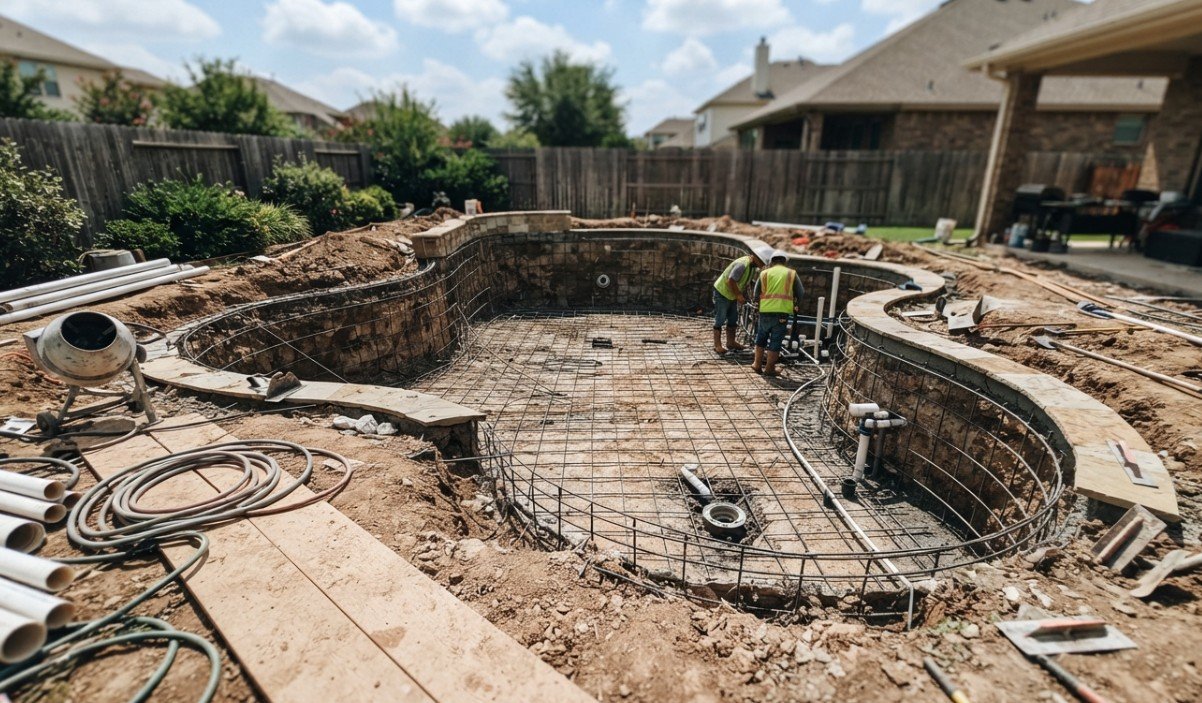
Key takeaway: a fibreglass pool typically takes 8 to 12 weeks from an approved permit to first swim, while a concrete pool takes 16 to 20 weeks. Add council approval time on top of that, which ranges from 2 weeks for a complying development pathway to 4 months for a full development application.
Most pool projects in Australia run 6 to 9 months end to end once you count the design stage, council approval and the build itself, though the actual construction is only a fraction of that. Fibreglass pools move fastest because the shell arrives pre-made; concrete pools take longer because the shell is built and cured on site. Here’s the stage-by-stage breakdown so you know what’s realistic to expect.
Typical Build Timeline
| Stage | Typical duration |
|---|---|
| Design and engineering | 2-4 weeks |
| Council approval | 2 weeks (complying development) to 4 months (full DA) |
| Shell manufacturing (fibreglass) or builder scheduling (concrete) | Runs in parallel with approval if started early |
| Excavation and site prep | About 1 week |
| Shell install (fibreglass) or steel and concrete spray (concrete) | 1-2 days (fibreglass), a few days (concrete) |
| Concrete curing (concrete only) | Minimum 14 days, full strength around 28 days |
| Plumbing, electrical, coping and decking | 1-3 weeks |
| Fencing, inspection and compliance certificate | Varies, must pass before filling |
| Total build (fibreglass) | 8-12 weeks |
| Total build (concrete) | 16-20 weeks |
The Stages, Step by Step
- Design and engineering (2-4 weeks): a site visit and survey, then your pool is drawn and structurally engineered to suit the block.
- Apply for council approval: a complying development certificate can land in 2 to 6 weeks; a full development application through council commonly takes 2 to 4 months. Start this the moment your design is locked in.
- Order your shell or book your builder: do this in parallel with the approval, not after it. Manufacturing and permit processing running at the same time is the single biggest way to shorten your overall timeline.
- Excavation (about 1 week): can run longer with restricted site access or difficult soil.
- Shell install or steel and concrete spray: a fibreglass shell is craned in and plumbed within days; a concrete pool has steel reinforcement and pipework fitted, then the shell is spray-formed, usually the next day.
- Curing (concrete only): a minimum 14-day cure before fencing work continues, with full design strength reached around 28 days.
- Plumbing, electrical, coping and decking (1-3 weeks): this is also when coping gets laid – see our guide to pool coping materials and costs if you have not chosen a material yet.
- Fencing, inspection and compliance certificate: your certifier inspects the barrier, lists any faults to fix, then issues the certificate of compliance you legally need before filling the pool.
Safety Note: You Cannot Fill the Pool Before This Certificate
Safety note: pool fencing inspection and certification requirements are set at the state level in Australia, so confirm the exact process with your own state or territory before relying on this guide alone. In every state, a licensed certifier must inspect your completed barrier and issue a certificate of compliance before the pool can legally be filled, and skipping ahead is a common, costly mistake: builders regularly have to drain a pool that was filled before the fence passed, just to fix a fault the inspector flagged.
Common Mistakes
- Waiting until the shell or builder is booked before starting the council approval, instead of running both at once.
- Filling the pool before the compliance certificate is issued, which can mean draining it again to fix a fencing fault.
- Starting the project in spring expecting a summer finish, when peak-season queues routinely push timelines out.
When to Call a Pro
A licensed pool builder manages the excavation, structure and plumbing stages, and a separate licensed certifier signs off the fencing and compliance certificate. Involve both early: a builder who is also across your state’s current approval pathway can often shave weeks off the process just by lodging the paperwork at the right time. If you are still deciding between pool types before you get to this stage, see our guides to inground vs above ground pools and fibreglass vs concrete vs vinyl liner pools.
Frequently Asked Questions
What’s the fastest a pool can be built in Australia?
A fibreglass pool can be excavated, craned in and plumbed in as little as 1 to 3 weeks once your permit is approved, with the fastest total projects (approval plus build) landing around 8 to 12 weeks in autumn or winter when manufacturing queues and permit processing are shortest.
Can I fill my pool before the fence passes inspection?
No. Every state requires a certifier to inspect and approve your pool barrier before you are issued a certificate of compliance, and you legally need that certificate before filling the pool. Filling early is a common shortcut builders warn against because it can mean draining the pool again to fix a fencing fault.
Does pool building take longer in summer?
Yes. Spring and summer are peak season for pool builders in Australia, so manufacturing lead times, permit processing queues and installer availability all stretch out compared with autumn and winter. Starting your approval process in the cooler months is one of the few ways to actually shorten your timeline.
How long does concrete pool curing really take?
The concrete shell needs a minimum of 14 days before fencing and finishing work can safely continue, but it takes closer to 28 days to reach its full design strength. Builders typically use the 14-day mark to get fencing installed and ready for inspection while the shell keeps curing underneath.
Do I need council approval for an above ground pool too?
In most Australian states, yes, any pool capable of holding more than 300mm of water needs a permit and compliant fencing, regardless of whether it is above ground or inground. See our guide to inground vs above ground pools for how the two compare on approval and build time.
