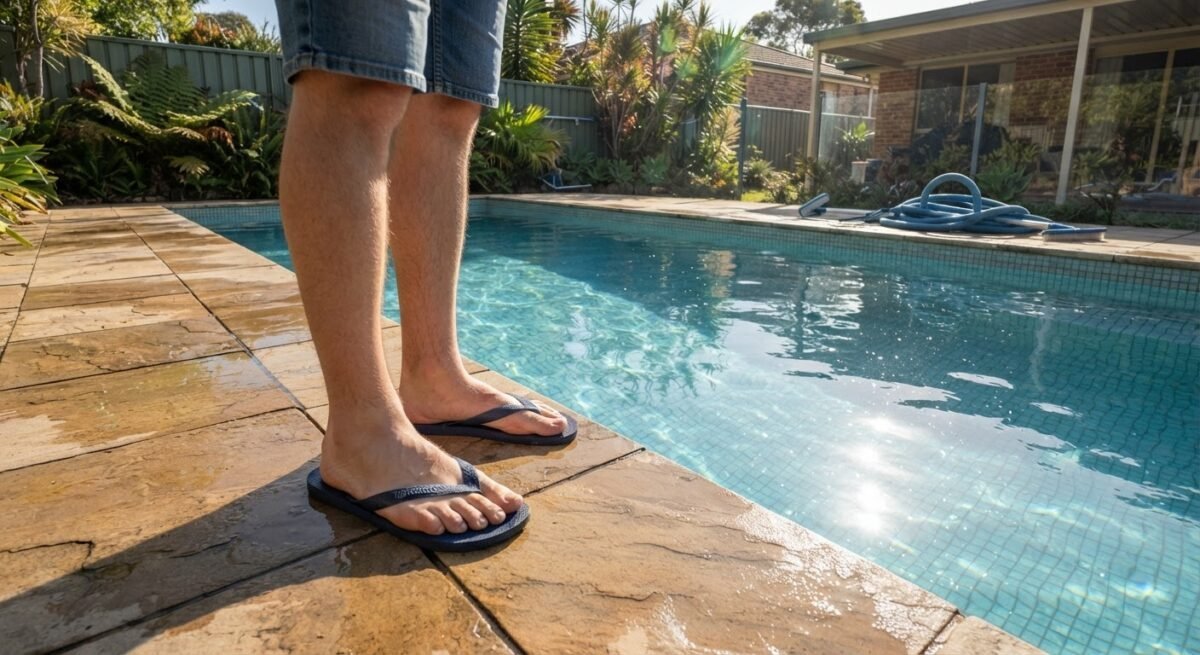
Key takeaway: A backyard lap pool in Australia is typically 10 to 15 metres long, 2 to 3 metres wide and around 1.2 to 1.8 metres deep. Most fibreglass manufacturers classify anything longer than about 8m as a lap pool rather than a standard pool. A competition lap pool is a fixed 25m or 50m, far longer than almost any backyard build.
A lap pool is defined by length, not depth or shape, it’s built long and narrow specifically so you can swim genuine laps rather than just float around. What counts as “long enough” varies by who’s building it, but the practical answer for a home pool sits well below what you’d picture at a public pool. Our full guide to pool costs by type covers pricing across every pool shape, this guide focuses on the length question specifically.
| Lap pool category | Typical length | Typical width | Notes |
|---|---|---|---|
| Compact, swim-jet assisted | 5–6m | 2–2.5m | Needs a counter-current swim jet system to be usable for real laps |
| Entry-level lap pool | 8–10m | 2–2.5m | The minimum length most fibreglass manufacturers classify as “lap” rather than standard |
| Standard backyard lap pool | 10–15m | 2.5–3m | The most common size for home swimmers who train regularly |
| Extended, resort-style | 15–20m+ | 3–4m | Needs a larger block and budget, fewer turns per session |
| Competition pool | 25m or 50m | Varies by lane count | Fixed standard lengths, see our full breakdown of an Olympic pool’s dimensions |
Why Length Matters More Than Width
The whole point of a lap pool is minimising how often you have to turn. A 10m pool means turning every 10 metres, which breaks your rhythm far more than a 15m or 20m pool would. Width matters much less for actual swimming, most home lap pools stick to 2 to 3 metres because anything narrower feels claustrophobic and can limit your stroke technique, particularly breaststroke and butterfly, while anything wider starts costing meaningfully more for very little swimming benefit.
Can a Short Pool Still Work for Serious Laps?
Yes, with a swim jet system. A compact 5 to 6 metre pool fitted with a counter-current jet lets you swim in place against a controllable current, which is a genuine option if your block simply doesn’t have the room for a 10m-plus pool. It’s a different swimming experience to turning at each end, some swimmers prefer it, others find it takes real getting used to, so it’s worth testing one in person before committing to it over a shorter conventional lap pool.
Does a Longer Lap Pool Cost More to Build?
Yes, length is one of the more direct cost drivers for a fibreglass or concrete shell, since a longer shell simply uses more material and, for concrete, more labour and formwork. The upside is that lap pools are usually a consistent, moderate depth rather than a deep diving end, which keeps excavation and volume down compared with a shorter but deeper pool of a similar cost. Our guide to how much an inground pool actually costs covers the fibreglass and concrete pricing behind that trade-off in detail.
If a full-length lap pool doesn’t suit your block, our guide to what a plunge pool actually is covers the opposite end of the spectrum, short, deep, and built for cooling off rather than swimming laps.
Frequently Asked Questions
How long is a lap pool in Australia?
A backyard lap pool in Australia is typically 10 to 15 metres long, 2 to 3 metres wide, and around 1.2 to 1.8 metres deep. It’s built long and narrow specifically for swimming laps rather than general use.
What’s the minimum length for a pool to be called a lap pool?
Most fibreglass manufacturers classify a shell longer than around 8 metres as a lap pool rather than a standard pool, since that’s roughly the point where the extra length starts being genuinely useful for swim training rather than just general swimming.
How long is an Olympic lap pool?
A competition Olympic pool is a fixed 50 metres long, with a 25 metre short-course option also common. Both are far longer than almost any backyard lap pool, which typically tops out around 15 to 20 metres.
Can a short pool still work for lap swimming?
Yes, a compact 5 to 6 metre pool fitted with a counter-current swim jet system lets you swim in place against a controllable current, which is a genuine option on a smaller block where a full-length lap pool won’t fit.
How wide should a lap pool be?
Most home lap pools are 2 to 3 metres wide. Narrower can feel claustrophobic and limit stroke technique, particularly breaststroke and butterfly, while wider adds cost without much real swimming benefit.
Does a longer lap pool cost more to build?
Yes, a longer shell uses more material and, for concrete, more labour, which pushes the price up. Lap pools do tend to have a consistent, moderate depth rather than a deep diving end, which helps offset some of that extra length cost.
