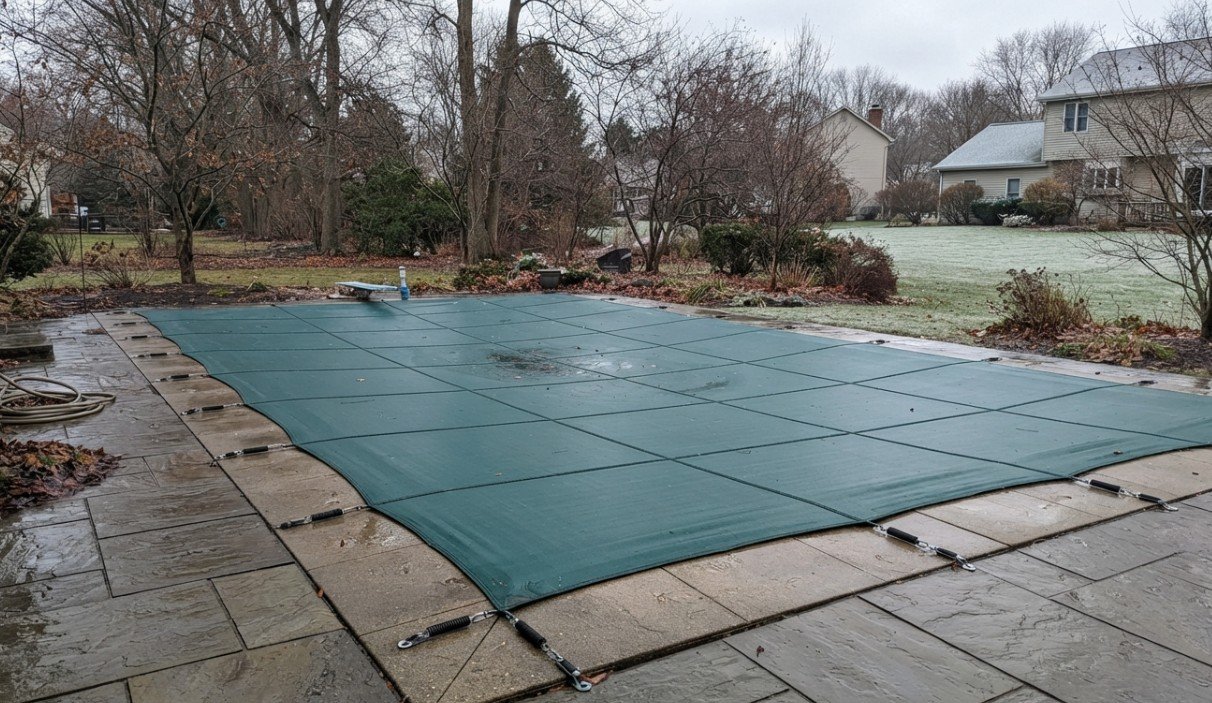
Key takeaway: Yes, generally leave a cover on over winter, but which cover matters. A solar blanket only makes sense if you’re still heating and using the pool, since it can cut heating costs by 50% to 70%. If the pool is closed for winter, swap to a dedicated leaf or debris cover instead, it blocks debris and sunlight (which slows algae) while still letting the pool breathe.
Every autumn there’s the same argument: haul the cover off and store it for six months, or just leave it be until spring. The honest answer is that leaving something on is almost always right, the debate is over which cover. A solar blanket earns its keep on a heated pool that’s still getting used. On a pool you’re closing up entirely, a dedicated winter leaf cover does a better job for less hassle, and neither one replaces the pool fence you’re legally required to keep working all year round.
Which Cover You’re Using Changes the Answer
- Solar blanket (bubble cover). Worth leaving on if you’re heating and swimming through winter and you’re on top of water chemistry. It holds daytime solar and heater warmth in overnight. Leave it on an unheated, unused pool for months and it just traps organic gunk against water nobody’s checking.
- Winter leaf or debris net cover. Built to stay on all season. It keeps leaves and organic matter out while still allowing gas exchange, so chemistry doesn’t get thrown out from being sealed up. This is the right choice for a pool you’re not using over winter.
- Automatic slatted cover. Can generally stay closed all winter with no downside, it’s the lowest-maintenance option, though it’s the most expensive to install in the first place.
Safety note: no pool cover, of any type, replaces the compliant child-resistant barrier required around your pool under state law and AS 1926.1:2024. Fencing and gate self-closers need to keep working through winter exactly as they do in summer, and a cover pooling rainwater on top can itself become a hazard if it looks solid but isn’t rated to bear weight. Check your specific state building or planning department for the exact barrier rules that apply to your property.
Benefits of Leaving a Cover On Through Winter
- Heat retention. A solar blanket can cut heating costs by 50% to 70% on a heated pool by stopping evaporative heat loss overnight, the single biggest source of heat loss on an open pool.
- Less algae, not more. Algae needs sunlight to grow. Blocking UV with any cover actually suppresses algae growth rather than encouraging it, as long as you’re still circulating the water.
- Slower chlorine loss. Sunlight breaks chlorine down through photodegradation. A cover blocks that UV exposure, so sanitiser lasts longer between doses.
- Less debris, less backwashing. Keeping leaves out means fewer trips to skim the pool and less strain on your filter over a season you’re not actively enjoying the pool anyway.
A Simple Winter Cover Routine
- Pick the cover that matches how you’ll actually use the pool. Heating and swimming through winter means a solar blanket. Closing up entirely means a leaf or debris cover.
- Keep the pump running daily, cover or no cover. A covered pool still needs circulation, skipping this is how a closed-up pool turns green by September regardless of what’s sitting on top of it.
- Clear pooled rainwater and debris off the cover itself. Weight from pooled water can stress the cover and its anchors, and leaves left sitting on top eventually break down and leach into the water underneath.
- Check chemistry every one to two weeks rather than daily. A covered, circulating pool drifts far more slowly than an open one, so you don’t need summer-frequency testing.
- If you’re swapping to a different cover for storage, dry it fully first. A solar blanket rolled away damp will grow mould in storage. Roll it rather than fold it, folding creates cracks along the fold lines over time.
Common Mistakes
- Treating any cover as a substitute for compliant fencing. It never is, regardless of what a cover salesperson implies.
- Switching the pump off because “it’s covered, so it’s fine.” Circulation is what actually keeps a closed-up pool from turning green, not the cover.
- Leaving a solar blanket on an unheated, unused pool all winter. Without heating to justify it, a dedicated leaf cover does the job better and doesn’t risk trapping organic buildup against still water.
If you’re weighing up whether heating is worth doing at all through the cooler months, our guides to how solar pool heating works and how long it actually takes to heat a pool cover what a cover can and can’t make up for. And whatever cover you land on, keep your pump running on a normal winter schedule, and keep an eye on your water chemistry every couple of weeks rather than assuming a covered pool looks after itself.
Frequently Asked Questions
Does a pool cover replace pool fencing in winter?
No. A pool cover of any type, including an automatic slatted cover, does not replace the compliant child-resistant barrier required around your pool under state law and AS 1926.1:2024. Your fence and gate self-closers need to keep working through winter exactly as they do in summer.
Will a pool cover stop algae growing in winter?
Mostly, yes. Algae needs sunlight to grow, and a cover blocks the UV that fuels it. That protection only holds up if you keep the pump running to circulate the water, a covered pool with no circulation can still turn green.
Can I leave a solar blanket on all winter?
Only if you are still heating and using the pool and keeping on top of the water chemistry. If the pool is closed for the season, a dedicated leaf or debris cover does a better job and avoids trapping organic buildup against still water.
How much does a pool cover actually save on heating in winter?
A solar blanket can cut heating costs by 50% to 70% on a heated pool, mainly by stopping the overnight evaporative heat loss that is the biggest source of heat loss on an open pool.
Do I need to run my pump if the pool is covered?
Yes, daily. Circulation is what actually prevents a closed-up pool turning green over winter, not the cover. Skipping pump runs because the pool looks protected is one of the most common winter maintenance mistakes.
