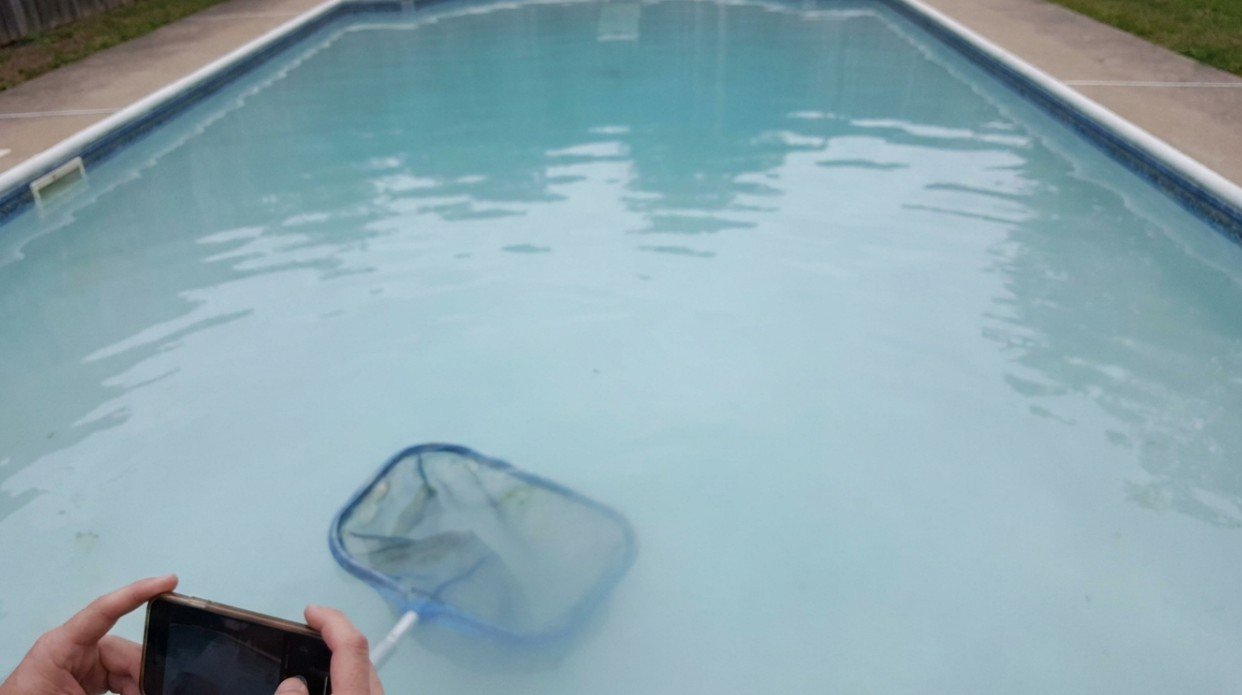
Key takeaway: Cloudy pool water almost always comes down to one of two things: sanitiser that can’t keep up with what’s in the water, or a filter that can’t catch what’s already suspended in it. Test pH (7.2–7.6), total alkalinity (roughly 80–120 ppm) and free chlorine (1–3 ppm) first: correcting chemistry and running the filter continuously clears most cloudy pools within 24 to 48 hours.
A cloudy pool almost always comes down to one of seven things: not enough sanitiser for what’s in the water, pH or alkalinity out of range, high calcium hardness, a dirty or undersized filter, fine particles your filter can’t catch, an early algae bloom that hasn’t turned green yet, or fresh fill water throwing your chemistry out. Work through them in roughly that order, since chemistry alone clears a surprising number of cloudy pools. For the fuller basics of keeping pool water balanced, see our full pool water chemistry guides.
A safety note before dosing anything: liquid chlorine and pool acid are hazardous, corrosive chemicals under SafeWork Australia and ADG Code criteria. Always add chemicals to water, never water to chemicals, store acid and chlorine separately since they react violently if mixed, and wear gloves and eye protection when handling concentrated product. For any exposure, call the Australian Poisons Information Centre on 13 11 26, available 24 hours a day. See What Is Pool Acid for full dosing steps.
Quick Reference: Target Ranges
| Parameter | Target range | What goes wrong if it drifts |
| pH | 7.2 to 7.6 | Chlorine stops sanitising properly, and skin and eyes sting |
| Total alkalinity | roughly 80 to 120 ppm | pH becomes unstable, sometimes called pH bounce |
| Calcium hardness | 200 to 400 ppm (concrete or tiled), 100 to 250 ppm (vinyl or fibreglass) | Too high causes scale and a fine white haze, too low causes corrosion |
| Free chlorine | 1 to 3 ppm | Not enough to break down organic matter and bacteria fast enough |
What You’ll Need
- A test kit or strips for pH, total alkalinity and free chlorine
- Your pool’s volume in litres (a pool volume calculator makes this quick, coming soon on this site)
- Liquid chlorine or your usual sanitiser, plus pool acid or buffer
- A clarifier or flocculant on hand for fine particles chemistry alone won’t fix
The 7 Causes of Cloudy Pool Water (and the Fix for Each)
1. Not Enough Sanitiser for What’s in the Water
Swimmers, pets, warm weather and strong Australian UV all burn through chlorine faster than many overseas dosing guides assume. Once free chlorine drops much below 1 ppm, the water can’t break down organic matter and dead micro-organisms fast enough, and those fine particles stay suspended as a haze well before the water turns visibly green.
Fix: test free chlorine first. If it’s below 1 ppm, shock dose with liquid chlorine (around 12.5% available chlorine in Australia) and run the pump continuously for 24 hours. As a rough guide, 1 litre of 12.5% liquid chlorine raises free chlorine by about 12 ppm per 10,000 litres, so a 50,000 litre pool needs roughly 4 to 5 litres to shock. Check your product’s actual percentage first, since strength varies by brand.
2. pH or Total Alkalinity Out of Range
High pH stops chlorine sanitising properly and can push dissolved calcium out of solution, adding a milky look on top of whatever else is going on (very high chlorine combined with high pH does the same thing). Low alkalinity makes pH swing wildly with every small addition, known as pH bounce, which makes every other fix harder to hold.
Fix: test alkalinity before pH and correct it first, since alkalinity buffers how much a dose actually moves pH. Aim for total alkalinity of roughly 80 to 120 ppm, then bring pH into the 7.2 to 7.6 range with pool acid to lower it or buffer to raise it. See What Is Pool Acid for exact dosing steps.
3. High Calcium Hardness
This shows up as a fine white haze rather than a murky or green tinge, and is more common where bore or tap water is naturally hard. The Australian Standard allows a wide 80 to 500 ppm range, but most pools sit more comfortably narrower: roughly 200 to 400 ppm for concrete or tiled pools, and 100 to 250 ppm for vinyl or fibreglass.
Fix: standard home test kits generally can’t read calcium hardness accurately, so take a sample to a pool shop. If it’s genuinely high, a sequestering agent helps short term, but a partial drain and refill is usually the real fix, since more chlorine won’t touch a mineral problem.
4. A Dirty, Clogged or Undersized Filter
Chemistry can be perfect and the water can still look hazy if the filter physically can’t remove what’s suspended in it. A dirty sand filter can start channelling, where water finds a path through cracks in the sand bed instead of filtering properly, and a clogged cartridge simply can’t flow enough water to catch fine debris.
Fix: backwash a sand filter until the sight glass runs clear, or remove and hose down a cartridge filter, soaking it in filter cleaner if it hasn’t been done in a while. While clearing cloudy water, run the pump continuously rather than on its usual schedule, so the water gets several full turnovers, not just one.
5. Fine Particles Too Small for Your Filter to Catch
Dust storms, pollen, and sunscreen or lotion residue from heavy pool use all produce particles fine enough to pass straight through most filter media, even when the filter itself is clean and working properly.
Fix: use a clarifier for mild cloudiness. It binds fine particles so your filter can catch them, over a few days. For heavier cloudiness, a flocculant works faster, binding particles so they sink, then you vacuum them out to waste. Flocculant only suits sand filters and will damage a cartridge filter, so check which one you have and follow the product’s label for your pool volume.
6. An Algae Bloom That Hasn’t Turned Green Yet
A dull grey or white haze, a slightly slippery pool floor, and chlorine that disappears faster than usual are early signs of algae before it’s dense enough to look green. Phosphates from fertiliser runoff and decomposing leaves are common feeders for it.
Fix: shock dose as in cause one, then brush the walls and floor to knock loose early growth before it can reseed the water. Keep the pump running continuously and retest daily until free chlorine holds steady rather than dropping overnight, which confirms the bloom is actually gone.
7. Fresh Fill Water or Heavy Rain
Topping up after evaporation, or a heavy rain event, dilutes chlorine, stabiliser and alkalinity all at once, and can wash in leaves, dust and organic runoff at the same time.
Fix: retest all five parameters after any top-up of more than around 10% of your pool’s volume, rather than assuming your last reading still holds. Rebalance from scratch, since the numbers you had before the rain no longer reflect what’s actually in the water.
Common Mistakes
- Reaching for algaecide or clarifier before testing and correcting the actual chemistry, which masks the cause instead of fixing it
- Running the pump on its normal daily schedule instead of continuously while clearing the water
- Adding flocculant to a cartridge filter, which the product isn’t designed for
- Guessing pool volume instead of measuring it before working out any dose
- Assuming the water is fixed the moment it looks clear, without retesting to confirm
When to Call a Pro
If cloudiness keeps returning despite correct chemistry and a clean filter, the cause is often mechanical: a failing pump, a cracked lateral letting sand bypass into the pool, or a salt cell that looks fine but isn’t actually producing chlorine. A pool shop water test finds this faster than repeated redosing.
Frequently Asked Questions
Is it safe to swim in a cloudy pool?
It depends on how cloudy and why. If you can still clearly see the main drain at the deepest point, a quick swim while you fix the chemistry is generally fine. If you cannot see the pool floor, stop swimming until you have retested and corrected the water, since poor visibility usually means low sanitiser and hides both drowning risk and algae or bacteria growth.
Why is my pool cloudy after I added chlorine or shocked it?
A short burst of haze after shocking is normal and usually clears within 24 to 48 hours as the filter catches the dead algae and organic particles the chlorine just broke down. Keep the pump running continuously rather than on its usual daily schedule, and it should clear on its own. If it is still cloudy after two full days, the filter itself likely needs a proper clean.
Why is my saltwater pool cloudy?
The same seven causes apply. A salt chlorinator just produces the chlorine automatically instead of you dosing it by hand, so a cloudy salt pool usually means the cell isn’t producing enough, the salt level is outside its operating range, or one of the other six causes is at play. Test salt level alongside the usual parameters rather than assuming the chlorinator is infallible.
How long does it take to clear a cloudy pool?
Most chemistry-related cloudiness clears within 24 to 48 hours once you have corrected the cause and run the filter continuously. Heavier cases treated with a flocculant can clear within hours once the settled particles are vacuumed out, while a genuine algae bloom or a badly fouled filter can take several days of repeated shocking and backwashing before the water is fully clear.
Sources
Sources
- SPASA Australia – Water Balance guidance
- Standards Australia – AS 3633-1989 Private Swimming Pools: Water Quality
- Better Health Channel (Victorian Government) – Swimming pools: water quality
- Australian Government Department of Health, Disability and Ageing – Poisons Information Centre
- Zodiac Australia – salt chlorinator guidance
