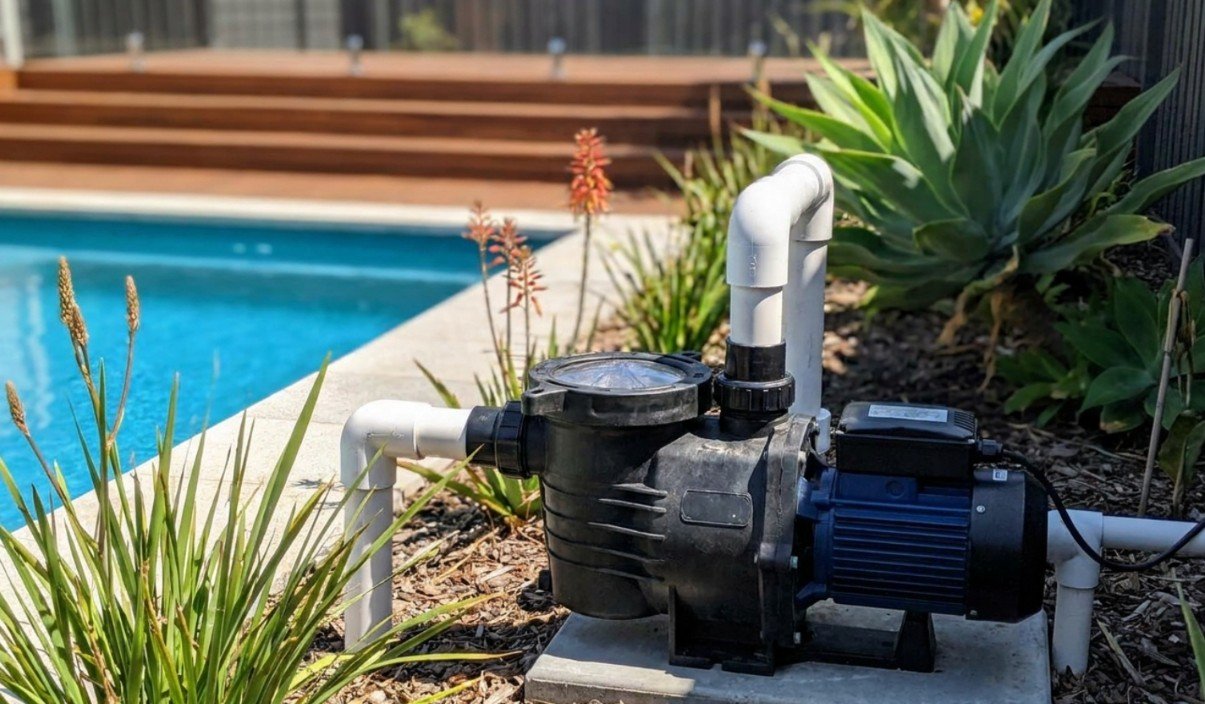
Key takeaway: A variable-speed pool pump typically costs $700–$1,200 more upfront than a single-speed pump but saves roughly the same amount every year in electricity, paying for itself in 12–18 months. Check for VEU or council rebates before you buy; several Australian energy schemes pay $100–$300 towards an accredited variable-speed installation.
A pool pump is the one piece of equipment that runs almost every day of the year, which is exactly why the wrong purchase shows up on the power bill for years afterwards rather than once at the checkout. This guide covers what actually separates one pool pump from another when you’re standing in front of a spec sheet, not brand names. For the technical detail on sizing your pump correctly and what drives running costs, see our guides to what size pool pump you need and pool pump running costs, and the broader guide to how pool pumps work.
At a Glance: Single-Speed vs Variable-Speed
| Typical AU price | Running cost per year | Payback period | |
|---|---|---|---|
| Single-speed | $400 – $900 | $550 – $1,250 | N/A |
| Variable-speed | $900 – $1,800 | $150 – $350 | 12–18 months vs single-speed |
A Safety Note
A pool pump is hardwired or plugged into a dedicated circuit at the equipment pad, and that circuit falls under AS/NZS 3000:2018’s pool zone requirements the same as a chlorinator or pool light: a 30mA RCD (safety switch) on the circuit, and equipotential bonding of any conductive parts within reach of the pool. This applies across Australia; it’s a wiring rule, not a state-based one. Swapping a pump like-for-like onto existing wiring is a job licensed electricians handle quickly, but never wire a new pump circuit yourself, and always confirm the pump’s IP rating suits an outdoor, weatherproof installation.
Single-Speed vs Variable-Speed: What Actually Changes
A single-speed pump runs at one fixed speed any time it’s switched on, which means it moves far more water than normal filtration actually needs, wasting most of that electricity as noise and heat rather than useful flow. A variable-speed pump (VSP) can run at a low, efficient speed for everyday filtration and only ramp up to full speed for vacuuming or backwashing, which is where almost all of its energy saving actually comes from, not some inherent difference in motor efficiency at full speed. The trade-off is upfront cost: a variable-speed pump typically costs several hundred dollars more than an equivalent single-speed pump, a gap most owners recover within 12 to 18 months through lower running costs.
Flow Rate and Turnover
A pump’s flow rate, in litres per minute, needs to match your pool’s volume and the number of hours you actually want to run it for, not just whatever comes bundled with a pool package deal. Oversizing wastes electricity moving more water than the filter needs; undersizing means longer run times to achieve the same turnover, and can starve equipment like a salt chlorinator that needs adequate flow to work properly. Work out your own pool’s exact figure with our pool pump sizing guide before comparing models on price alone.
Energy Rating and Rebates
Pool pumps sold in Australia carry a star energy rating, and a 6-star or higher variable-speed model is usually the one that qualifies for state energy-efficiency rebates. Ask an accredited installer about Victorian Energy Upgrades (VEU) rebates, typically $100–$300 depending on pump size, and check whether your local council runs its own pump rebate on top; some councils have offered up to $250 for replacing an old single-speed pump with a rated efficient model. These rebates apply at the point of an accredited installation, not as a retrospective claim, so confirm eligibility before you buy rather than after.
Noise Level
A single-speed pump running at full speed all day is one of the more noticeable noise sources in a suburban backyard, and it’s worth checking a pump’s decibel rating if the equipment pad sits near a bedroom window or a neighbour’s fence line. Variable-speed pumps are quieter at low speed by nature of running slower most of the time, but check the rating at full speed too, since that’s what runs during vacuuming and backwashing regardless of pump type.
Self-Priming and Build Quality
A self-priming pump draws water up from below its own level without you needing to manually fill the pump basket first, a genuine convenience after backwashing or any job that lets air into the line. Check the basket and lid design too: a large, clear lid makes it obvious at a glance whether the basket needs emptying, where a small or opaque lid means guessing or opening it to check. Mechanical seal and bearing quality is harder to check on a spec sheet, but warranty length is a reasonable proxy: a longer warranty generally signals more confidence in the seal and motor bearings holding up under Australian conditions.
Buying Checklist
- Match the flow rate to your pool’s actual volume and desired turnover time, not a bundled package default.
- Check for a 6-star or higher energy rating and ask about VEU or council rebates before buying.
- Compare decibel ratings at both low and full speed if noise near the equipment pad matters.
- Confirm the pump is self-priming and check the basket lid design before assuming easy maintenance.
- Compare warranty length as a proxy for seal and bearing quality; longer generally signals a more durable pump.
- Confirm the installation includes a 30mA RCD on the pump’s circuit, done by a licensed electrician.
When to Call a Pool Professional
Comparing specs and choosing a pump is something most owners can do with their pool’s volume and desired turnover time in hand. Call a licensed pool electrician for the actual circuit wiring and RCD installation, and a pool professional for correctly sizing plumbing fittings if you’re upgrading from an old single-speed pump to a physically different variable-speed model. See our guide to how long pool pumps last for the signs it’s time to replace rather than repair an ageing pump.
Frequently Asked Questions
Is a variable-speed pool pump worth the extra cost?
For most Australian pools, yes. A variable-speed pump typically costs $700–$1,200 less to run per year than a single-speed pump doing the same job, which usually covers the higher upfront cost within 12–18 months, and it keeps saving after that.
What size pool pump do I need?
It depends on your pool’s exact litre volume and how many hours a day you want to run it for turnover, not a fixed number. See our full sizing guide for the formula and worked examples rather than assuming any single wattage suits every pool.
Are there rebates for variable-speed pool pumps in Australia?
Often, yes. Victorian Energy Upgrades (VEU) offers rebates of roughly $100–$300 for an accredited variable-speed pump installation, and some councils run their own pump rebates on top. Confirm eligibility with an accredited installer before buying, since rebates generally apply at the point of installation.
How do I know if a pool pump is self-priming?
Check the product spec sheet; self-priming is usually stated explicitly. A self-priming pump draws water up from below its own level automatically, without needing the pump basket manually filled first after backwashing or any job that lets air into the line.
How long should a pool pump warranty be?
Most quality pool pumps in Australia carry a 2–3 year warranty on the motor, with some premium variable-speed models offering longer. A longer warranty is a reasonable proxy for confidence in seal and bearing quality, though it’s worth checking exactly what’s covered rather than assuming full coverage.
Sources
Editorial notes (remove before publishing): Category = Equipment. Pillar link = How Pool Pumps Work (/how-pool-pumps-work/, DRAFT – [INTERNAL LINK OPPORTUNITY]). Sibling links = What Size Pool Pump Do I Need (DRAFT – [INTERNAL LINK OPPORTUNITY]), How Much Power Does a Pool Pump Use (live), How Long Do Pool Pumps Last (live). No affiliate links/CTA per pre-monetisation rule. No byline added, author box is theme-rendered. Fact-check: VSP vs single-speed running cost and payback period confirmed via web search; VEU/council rebate figures confirmed via web search; AS/NZS 3000:2018 pool-zone RCD requirement confirmed via web search (same source as chlorinator post).
