Robotic vs Suction vs Manual Pool Cleaners: Which Is Right for You?
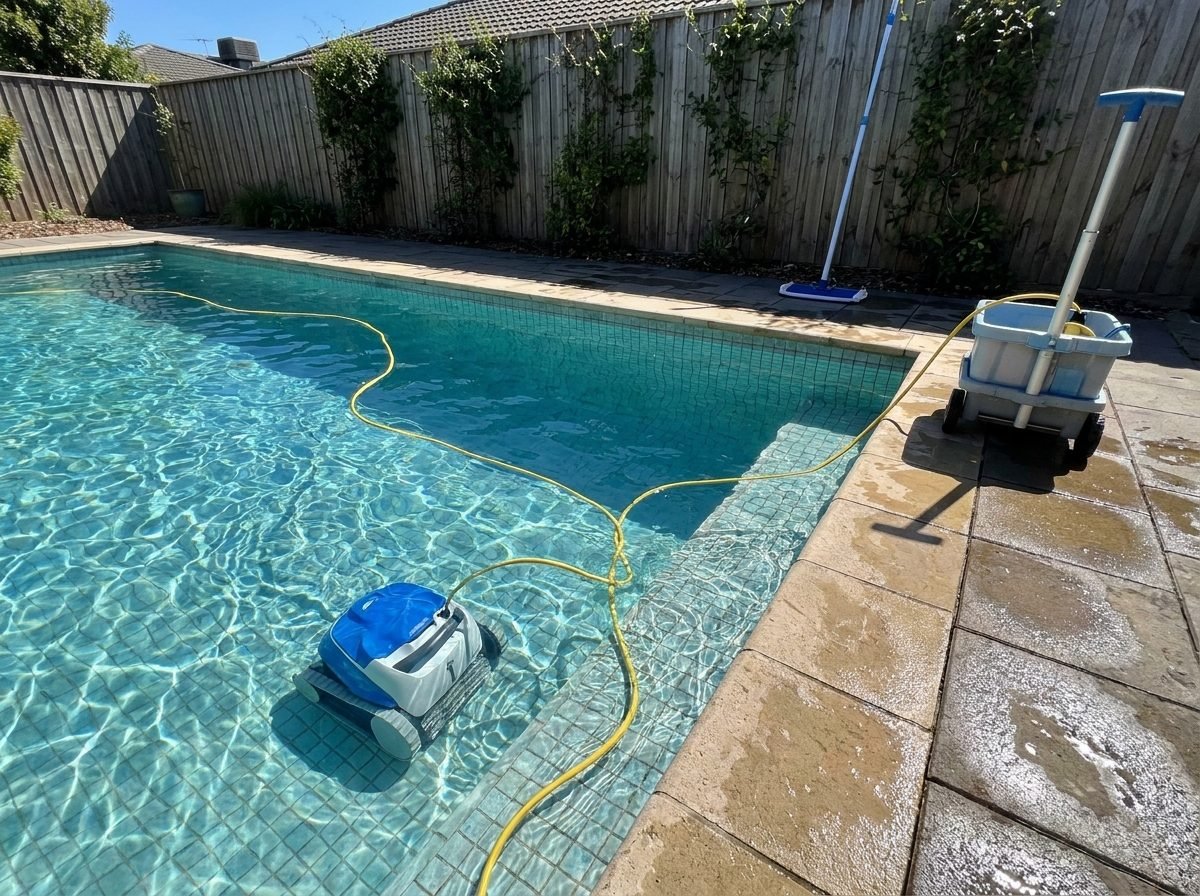
Robotic, suction, pressure-side or manual: real AU pricing, running costs and maintenance for each pool cleaner type, so you can pick the right one.
Robotic, suction, pressure-side or manual: real AU pricing, running costs and maintenance for each pool cleaner type, so you can pick the right one.
How much chlorine to add to your pool by volume, for liquid and granular chlorine, with a worked example and the maths shown.
Pool pH creeping above 7.6? Here’s the safe way to correct it with pool acid, the actual dose cap, and how long to wait before retesting.
Key takeaway: Every Australian state and territory requires a pool safety barrier at least 1200mm (1.2m) high, measured from finished ground level. That part is consistent nationally. What differs by … Read more
Key takeaway: Manually vacuuming a pool means attaching a vacuum head and hose to your skimmer (or a dedicated suction port), then pushing it slowly across the floor while the … Read more
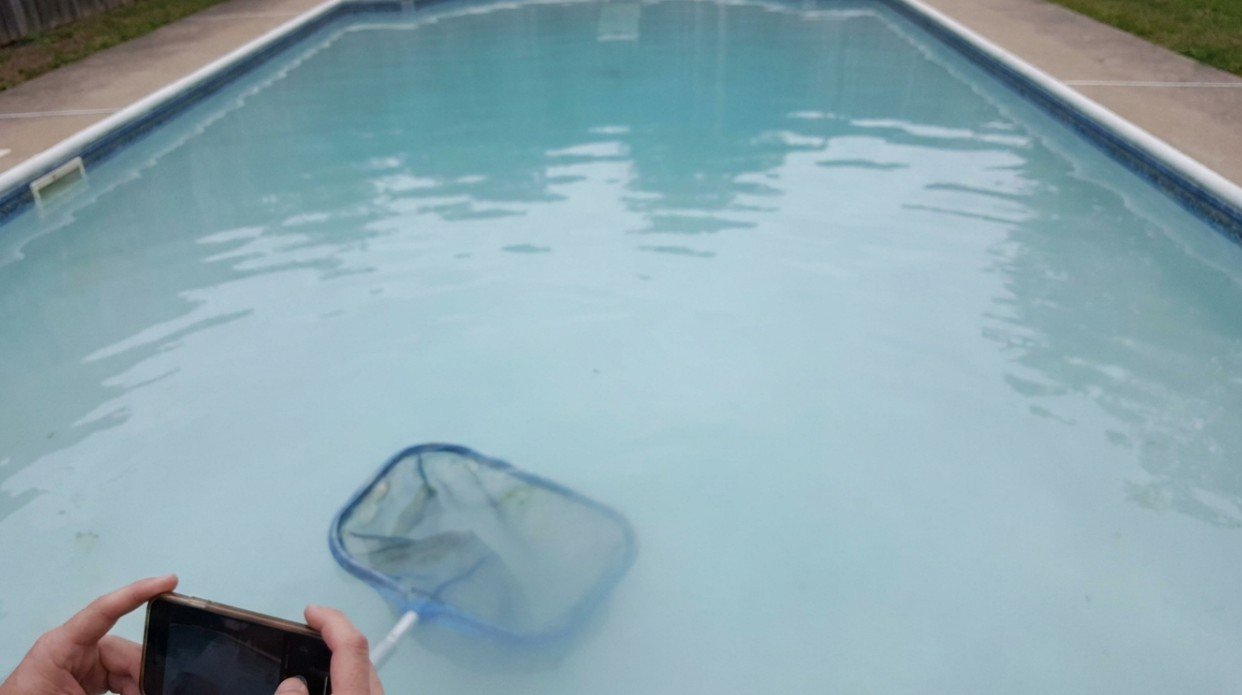
Key takeaway: Cloudy pool water almost always comes down to one of two things: sanitiser that can’t keep up with what’s in the water, or a filter that can’t catch … Read more
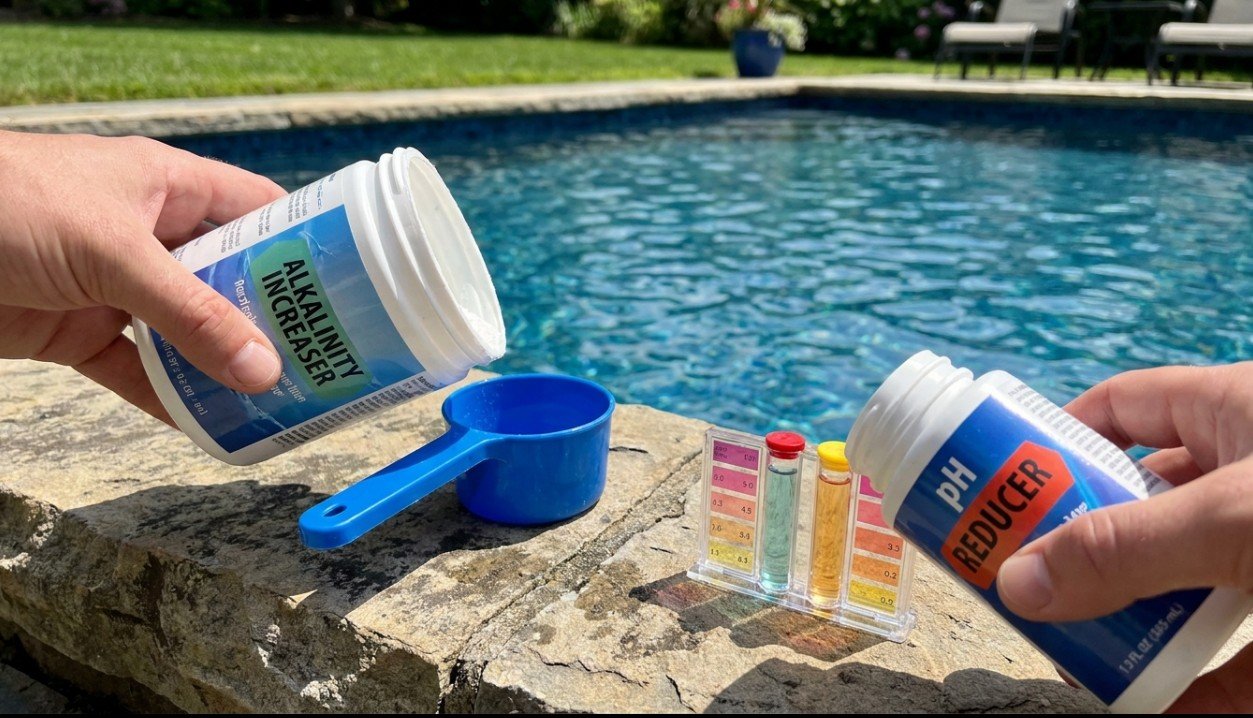
Total alkalinity should sit between 80 and 120 ppm. Here’s how to raise it or lower it correctly, with real AU dosing and the mistakes that overshoot it.
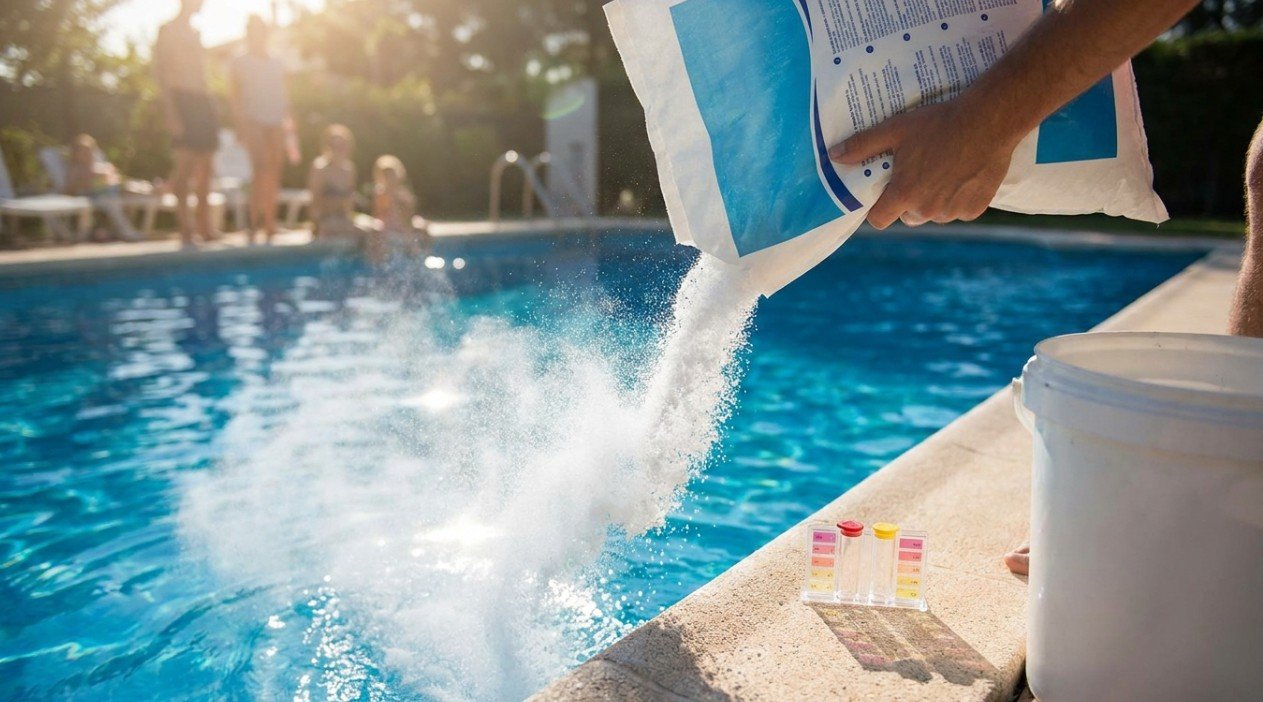
Key takeaway: Raising a pool’s salt level by 1,000 ppm takes 1 kilogram of pool salt per 1,000 litres of water. But the target you’re dosing to depends on your … Read more
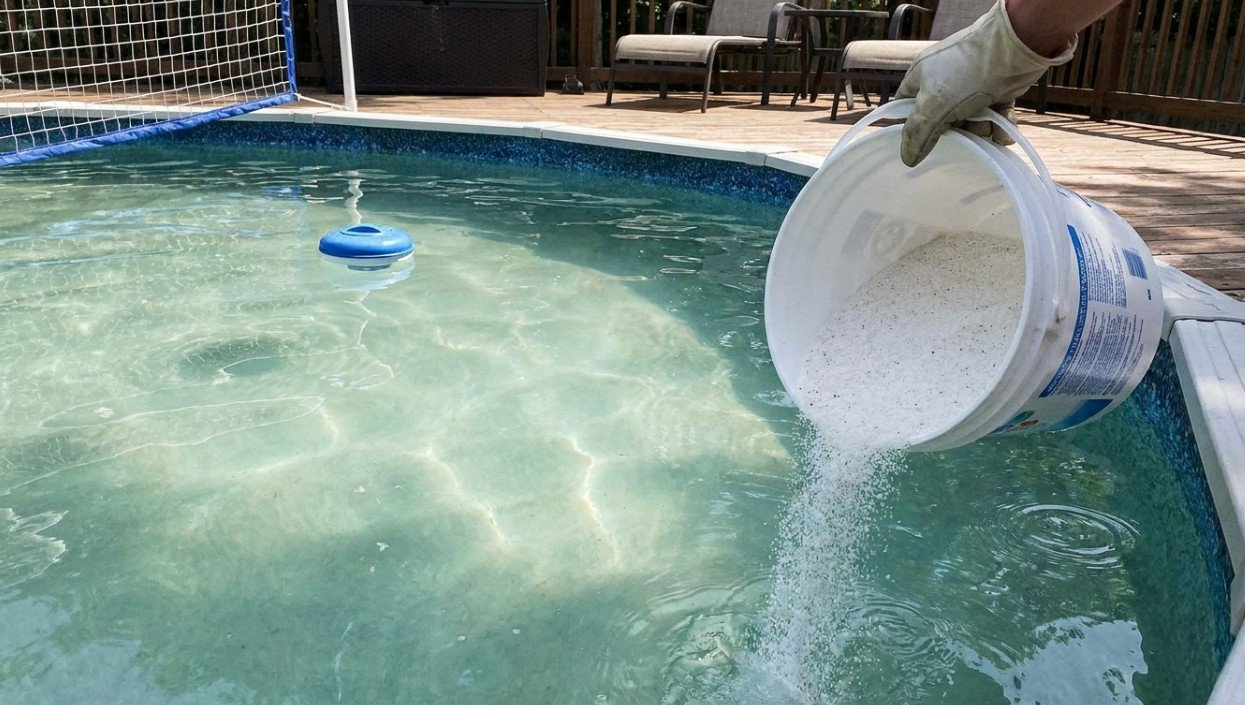
Key takeaway: shocking means temporarily pushing free chlorine to roughly 10x your combined-chlorine reading — about 5–10 ppm for routine upkeep, 20–30 ppm for a genuine algae bloom — to … Read more
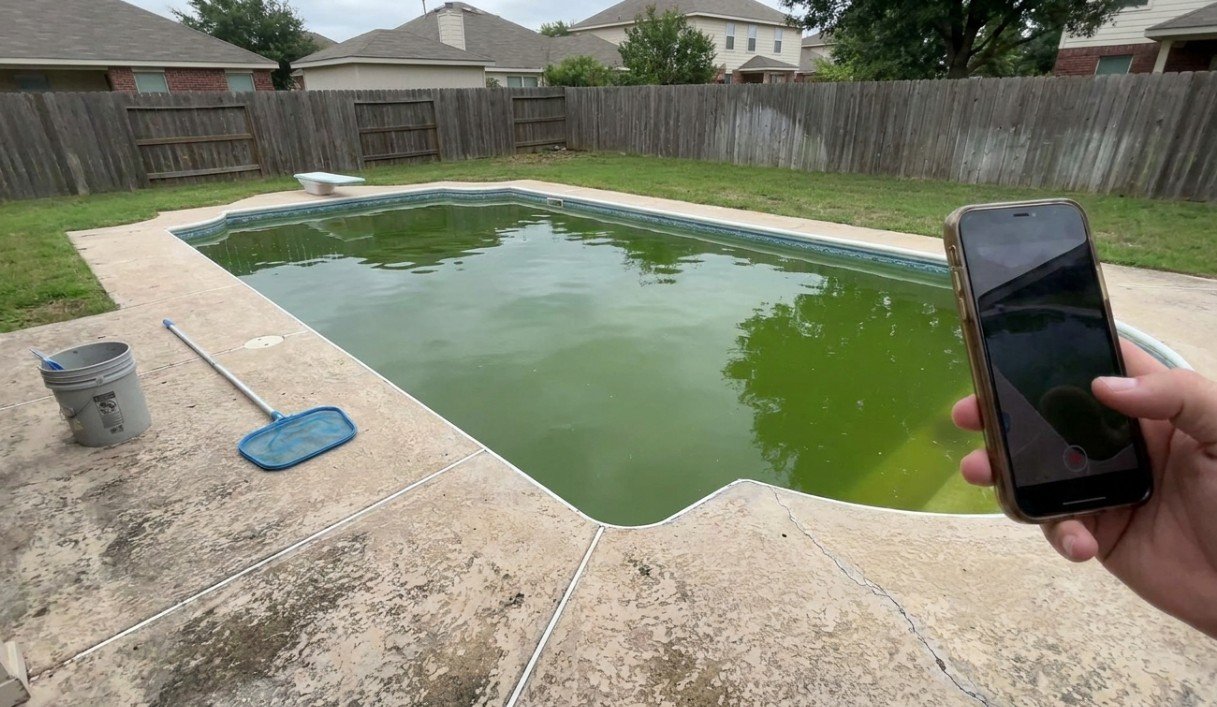
Key takeaway: a green pool means your sanitiser lost the fight against algae — almost always low chlorine, high pH, or both, with poor circulation piling on. Fix pH first … Read more